

Implants and Occlusion — Why Load Matters After Placement
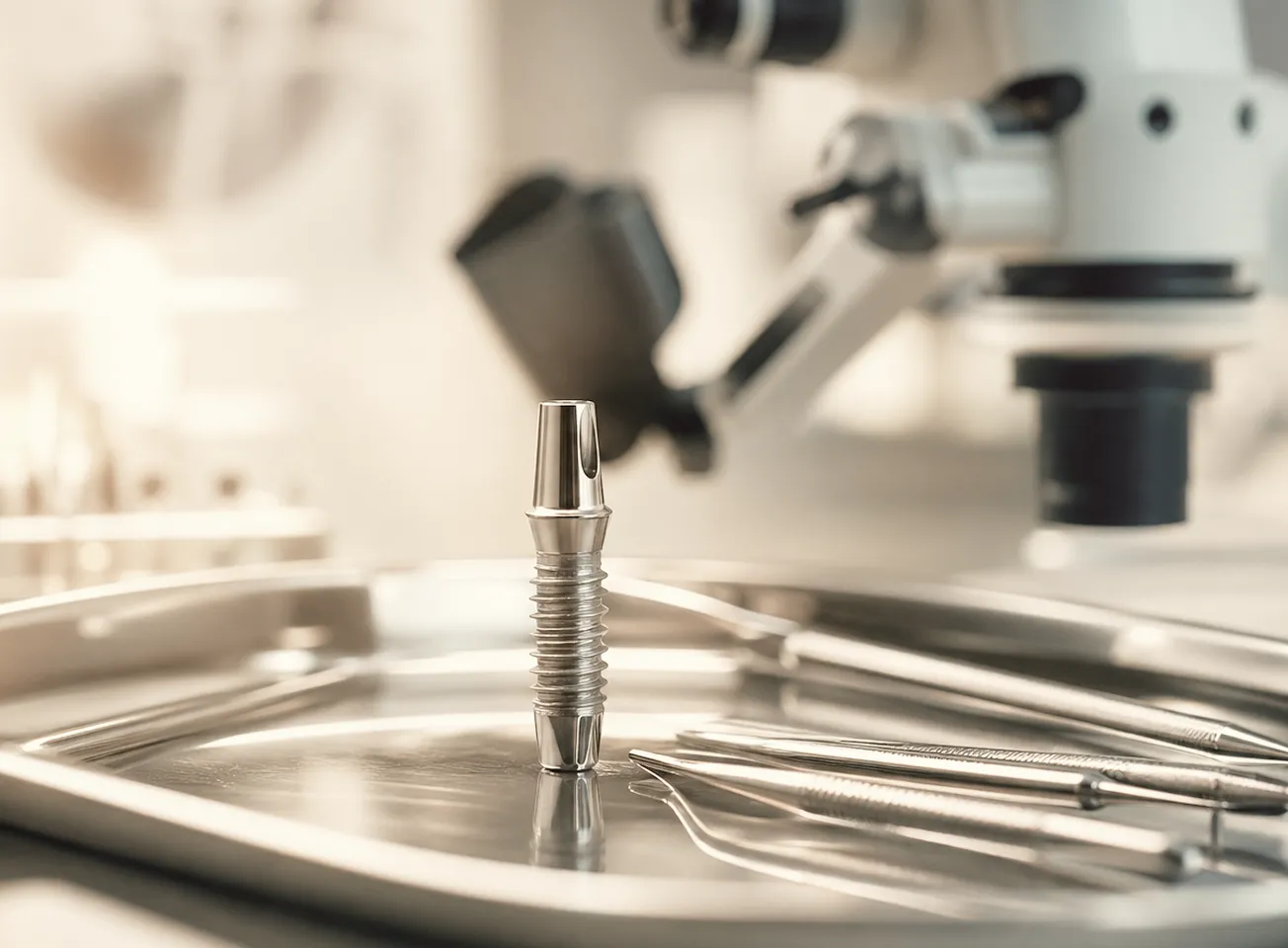
A dental implant is not a tooth. It integrates beautifully with bone, tolerates years of function, and never decays - but it does not have a periodontal ligament. That single anatomical difference changes everything about how occlusal load must be managed. Getting the hardware in is the first half. Getting the bite right is what determines whether the hardware lasts.
Why Implants Feel Load Differently
Natural teeth are suspended in their sockets by a periodontal ligament - a shock-absorbing, pressure-sensing layer of fibres that allows micro-movement and alerts the nervous system to excessive force in milliseconds. Implants fuse directly to bone (osseointegration). There is no cushioning, no micro-mobility, and significantly less sensory feedback. This means an implant cannot deflect load the way a natural tooth does. It transmits force directly to the bone interface. Over time, if that force is chronically excessive - from a high crown, a bruxing pattern, or a poorly balanced bite - the bone around the implant begins to resorb.
What "High Bite" Means on an Implant Crown
When a crown is seated even slightly high - 20-30 microns above the surrounding occlusion - natural teeth around it flex and accommodate. An implant crown cannot accommodate. It takes the full load of every closing movement. Patients often report the implant crown "feels different" but not overtly painful, so the problem goes uncorrected. Months later the bone level drops, the crown loosens, or the screw fractures. The cause in these cases is almost always occlusal, not biological.
- Check occlusion in centric, lateral, and protrusive excursions - not just in maximum intercuspation
- Avoid implant crowns acting as the first contact in any excursive movement
- Use softer indicator film (8-12 μm) to detect high contacts that regular shimstock misses
- Re-examine occlusion at 3 months post-loading - soft tissue changes alter crown height
- In bruxers, plan occlusal protection before the final crown is delivered
Bruxism, Implants, and What Happens at Night
Bruxism applies lateral and protrusive forces at magnitudes well above normal chewing - sometimes three to five times greater. Natural teeth spread this load across the entire periodontal ligament network. An implant concentrates it at the bone-implant interface. This does not mean patients who grind cannot have implants - many have successful implants for decades. It does mean that an occlusal splint is not optional in these patients: it is part of the implant protocol. The splint should be fitted before loading, worn consistently at night, and checked for fit every six months as the bite and musculature evolve.
"We tell patients: the implant is the easy part. The bite that protects it over twenty years - that is the conversation we need to have before surgery."
- MedPalm Clinical Team
Single Implant, Bridge, and Full-Arch Loading - Different Rules
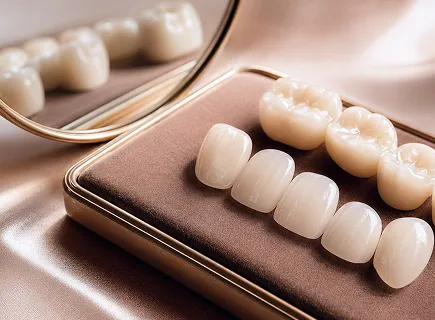
A single implant crown operates essentially in isolation - it must be checked independently of the surrounding teeth in all excursive movements. A three-unit implant bridge spans two implants with a pontic: the loading geometry becomes more complex, and both implants must share force symmetrically or one will carry disproportionate stress. Full-arch implant restorations (all-on-4 or similar) shift the entire occlusal scheme onto a fixed prosthesis anchored to four to six implants - bite design in these cases is not an adjustment at delivery, it is the primary engineering decision, planned in wax-up before any implant is placed. In every scenario, the common denominator is that load must be distributed intentionally rather than left to chance.
Indicative Starting Prices
For Implant and Restorative Treatment at MedPalm Dental
Tooth Implant
Titanium implant root to support a permanent replacement tooth
AED 6 600
Crown on Implant
Ceramic crown fixed to a healed dental implant
AED 6 000
Bone Augmentation
Bone graft to restore volume and support implant placement
from AED 4 500
Considering an Implant?
Let's plan the bite before we plan the surgery.
More to Read
on Restorative