


TMJ Diagnosis and Treatment in Dubai with a TMJ Specialist (Gnathologist)
Jaw pain, clicking, headaches, or difficulty opening your mouth can be signs of TMJ dysfunction (TMD). At MedPalm Dental, our TMJ specialists assess the whole jaw system: the joints, muscles, teeth, and bite. We evaluate how everything works together to understand the cause of your symptoms and create a personalized treatment plan.
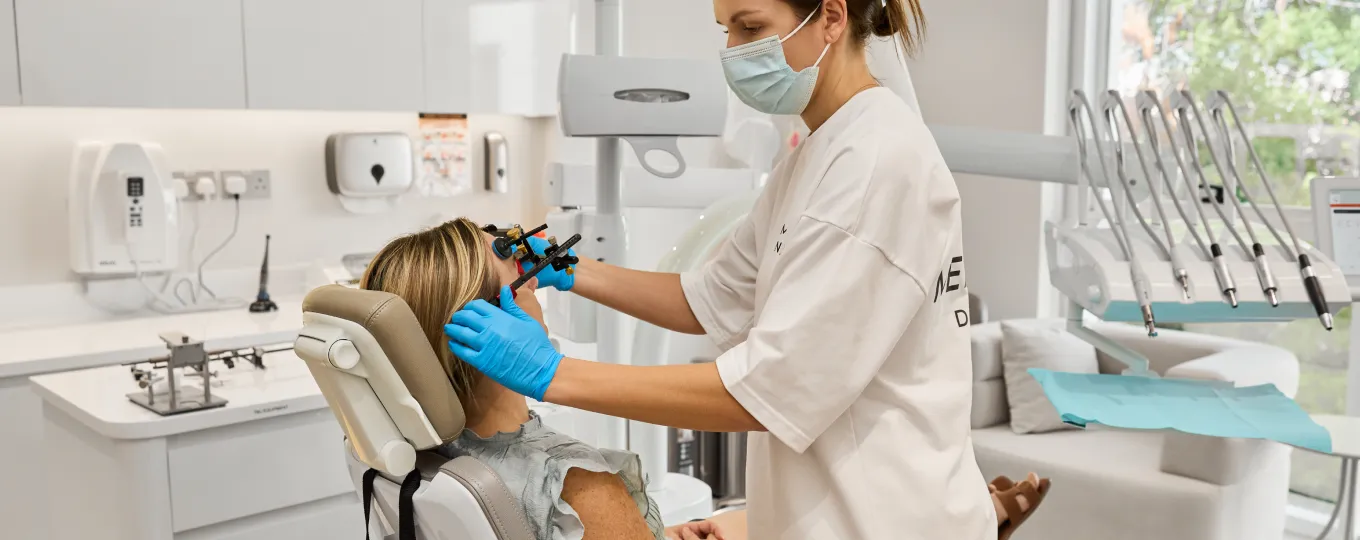
The MedPalm Approach
Jaw Pain, Clicking, or Headaches? When to See a TMJ Specialist
Temporomandibular joint dysfunction does not always begin with noticeable pain. The first changes often appear gradually, and many patients dismiss clicking when opening the mouth, tired chewing muscles, or mild discomfort during meals as a temporary inconvenience.
Over time, symptoms can become more pronounced and affect chewing, sleep quality, and everyday comfort. The earlier the cause is identified, the better the chances of getting normal jaw function back and achieving a stable result.
We recommend seeing a specialist if you notice one or more of the following symptoms:
- Clicking, popping, or other noises in the jaw joint when opening or closing the mouth
- Pain in the jaw joint, near the ear, or in the temples when chewing, after talking for a long time, or after waking up
- Difficulty opening the mouth fully, or a jaw that locks or shifts to one side
- Tension or soreness in the chewing muscles, especially in the morning
- Clenching or grinding the teeth at night (bruxism)
- Frequent headaches, temple pain, or tension in the face
- Excessive tooth wear, chipped fillings, crowns, or veneers
- A bite that feels different, as if the teeth no longer meet the same way
- Ear pain when chewing with no signs of ear infection
- Ringing or buzzing in the ears (tinnitus), or a blocked or full feeling in the ears, when an ear, nose, and throat (ENT) doctor finds no cause
- Neck and shoulder pain when the jaw muscles are tense
None of these symptoms on its own confirms TMJ dysfunction.
However, if they occur together, recur, or gradually get worse, you should have an assessment.
What Is the TMJ?
The temporomandibular joint, or TMJ, connects your lower jaw to your skull. It allows your jaw to move when you speak, chew, swallow, smile, and yawn.
But TMJ dysfunction is rarely about the joint alone.
The jaw joints work together with the chewing muscles, teeth, and bite. A problem in one area can affect how the rest of the system functions.
This is why we do not look only at the painful joint. We assess how your whole jaw system (joints, muscles, and teeth) works together.
What Causes TMJ Dysfunction?
There is rarely one single cause. TMJ dysfunction usually develops gradually, and the most common factors include:
- Teeth grinding (bruxism) and habitual clenching of the teeth
- Bite problems (malocclusion)
- Excessive tooth wear
- Missing teeth
- Uneven chewing forces
- Previous injuries
- Changes after orthodontic or prosthetic treatment
- Conditions affecting the jaw joints, such as arthritis or osteoarthritis
- The individual shape of the joints and jaws
Symptoms alone cannot show what is happening. To find the cause, we need to assess the whole jaw system.
Why Patients Choose MedPalm Dental
- Years of specialization in TMJ diagnosis and treatment
- A comprehensive approach that considers the joints, chewing muscles, teeth, and bite
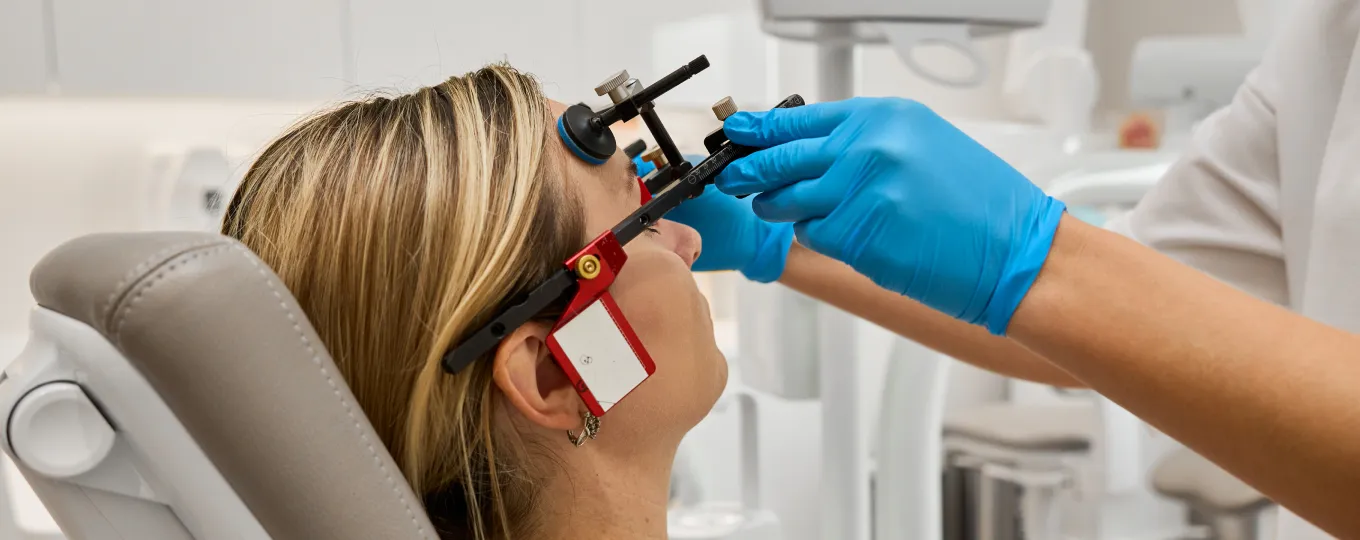
- Modern digital diagnostics, including cone beam CT (CBCT), condylography, and digital occlusal analysis
- Multidisciplinary planning with specialists from different areas of dentistry
- Consultations in English and Russian
- Medical documents for reimbursement from international insurance — please ask our reception for details
- Convenient location in Jumeirah, Dubai, with free private parking
- A transparent, step-by-step plan with a detailed explanation of each clinical decision
- Fair prices with no hidden fees or unexpected extra charges throughout treatment
How Is TMJ Dysfunction Diagnosed?
A thorough assessment of jaw function is the foundation of any treatment plan. Its purpose is not to confirm what was assumed in advance but to find out what actually caused your symptoms. We decide the scope of the examination for each patient.
01
Initial Consultation
The first appointment begins with a detailed conversation. Your clinician will ask when the symptoms started and whether you have had orthodontic or prosthetic treatment or injuries in the past. A clinical examination follows, during which we assess:
- The function of the temporomandibular joints
- The range and symmetry of mouth opening
- The condition of the chewing muscles
- How the teeth come together and signs of overload
02
Digital Diagnostics
If the clinical examination is not sufficient, your clinician may recommend:
- Cone beam CT (CBCT) to assess the bone structures of the TMJ
- Intraoral digital scanning
- Digital occlusal analysis
- Condylography to analyze mandibular movement
- Photo documentation
03
What You Receive After the Assessment
Once all tests are complete, your clinician will review the findings with you in detail. You will receive:
- A clear explanation of the cause of your symptoms
- An assessment of the condition of your joints, chewing muscles, teeth, and bite
- A personalized treatment plan
- Approximate timelines and a preliminary cost estimate
TMJ Treatment Options
Once the assessment is complete, your clinician creates a treatment plan for your case. It depends on the cause of the dysfunction, the severity of the symptoms, and the overall condition of the jaw system.
Controlled Therapeutic Repositioning of the Lower Jaw
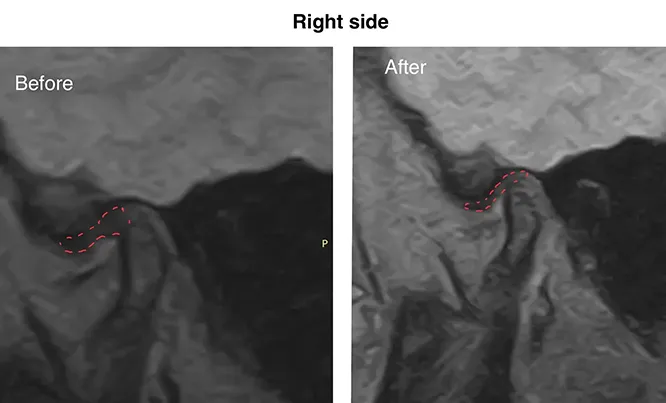
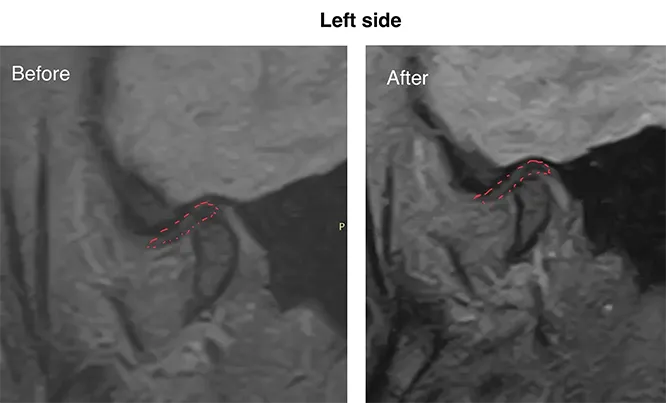
A custom mouthguard gradually guides the lower jaw into a physiologically stable position. Treatment is monitored with condylography, CBCT, and MRI.
Custom Night Guard
Helps reduce the load on the joints and chewing muscles, stabilize the correct position of the TMJ, and protect the teeth. Each night guard is made for the specific patient.
Comprehensive Occlusal Rehabilitation
If there is malocclusion and the chewing load is uneven, your clinician may recommend comprehensive occlusal rehabilitation after a TMJ and bite assessment. It can use prosthetic or orthodontic methods, or a combination of both.
Treating Pathological Bruxism as a Cause of TMJ Dysfunction
Your clinician will suggest methods to reduce the load on the teeth, joints, and muscles and to maintain the results.
Comprehensive Functional Rehabilitation
In complex cases, specialists from several areas of dentistry work together to restore function and aesthetics step by step.
Ongoing Monitoring and Follow-Up
At follow-up visits, your clinician evaluates your progress and helps you maintain the result in the long term.
How Treatment Works: 4 Stages
Treatment has four stages: an accurate diagnosis, planning, the main course of treatment, and monitoring the results.
01
Comprehensive Diagnostics
The clinician performs a clinical examination and reviews the results of the tests: CBCT, MRI (if needed), condylography, photo documentation, digital scans, and other examinations. This assessment of the teeth, bite, muscles, and temporomandibular joints identifies the exact cause of the symptoms, so the clinician can make a diagnosis and create a personalized treatment plan.
02
Treatment Planning
The clinician explains what problems were found, which methods are recommended, how long treatment will take, and the cost of each stage.
03
Main Course of Treatment
Based on the results of the TMJ and bite assessment, the clinician will create a personalized treatment plan. Depending on the cause of the dysfunction, it may include a custom night guard, controlled therapeutic repositioning of the lower jaw, occlusal rehabilitation, or orthodontic, prosthetic, or combined treatment. This approach makes it possible not only to relieve the symptoms but also to restore stable function of the jaw system.
04
Outcome Monitoring
At each stage of treatment, the clinician evaluates the changes with a clinical examination and, if needed, repeat TMJ and bite tests. After treatment is complete, the patient receives personal recommendations on maintaining the result and on prevention, along with a schedule of follow-up visits.
Our TMJ Specialists

Treating TMJ dysfunction requires an understanding of how joints, muscles, teeth, and occlusion function as a single system. My goal is to find the cause — not simply prescribe a splint.
Specialization: diagnosis and treatment of TMJ dysfunction, bruxism, occlusal disorders, and comprehensive functional rehabilitation.
Book with a TMJ Specialist
Orthodontics and gnathology are inseparable. Correct occlusion determines how the joints and muscles function. I help patients find the balance between aesthetics and function.
Specialization: orthodontics, pediatric orthodontics, diagnosis and treatment of TMJ dysfunction, functional occlusal correction.
Book with a TMJ Specialist
Aesthetics that ignore the joint do not last. I start from measurement: 3D cephalometry, CBCT, occlusion analysis. A restoration has to serve the function, not fight it.
Specialization: digital diagnosis of TMJ disorders, 3D cephalometric and CBCT analysis, the VieSID occlusion concept, aesthetic and functional restoration.
Book with a TMJ SpecialistPatient Treatment Stories
All treatment storiesCase 1. Treating Clicking and Pain in the Temporomandibular Joint
Patient: woman, 34.
Symptoms
- Clicking when opening the mouth for 2 years.
- Pain in the left jaw joint when chewing.
- Intermittent headaches.
Diagnostics
A comprehensive TMJ and bite assessment was performed, including a clinical examination, CBCT, MRI, and condylography.
The examination revealed:
- narrowing of the posterior joint space on both sides;
- complete anterior displacement of the joint discs with reduction;
- hypertonicity (increased tension) of the chewing muscles;
- an altered path of lower jaw movement.
Diagnosis
- Temporomandibular joint dysfunction.
- Myofascial pain syndrome.
- Occlusal disorder.
Treatment
Treatment was performed in stages:
- A custom mouthguard to move the lower jaw into the correct position.
- Monitoring of the joint position with repeat TMJ and bite tests.
Outcome
After 4 months, the pain and clicking in the joint had completely disappeared. The lower jaw moved comfortably again, and a follow-up examination confirmed a stable joint position.
Case 2. Limited Mouth Opening and Severe Tooth Wear
Patient: man, 42.
Symptoms
- Limited mouth opening.
- Pain in the jaw joints.
- Teeth grinding during sleep.
- Excessive tooth wear.
- Repeated chipping of fillings on the upper front teeth.
Diagnostics
A comprehensive TMJ and bite assessment was performed, including a clinical examination, CBCT, MRI, condylography, photo documentation, and digital occlusal analysis.
The examination revealed:
- impaired function of the temporomandibular joints;
- hypertonicity (increased tension) of the chewing and temporal muscles;
- premature occlusal contacts;
- pathological tooth wear and overloading of the front teeth.
Diagnosis
- Temporomandibular joint dysfunction.
- Limited mouth opening.
- Bruxism.
- Pathological tooth wear.
- Occlusal disorder.
Treatment
Treatment was performed in stages:
- TMJ and bite assessment to determine the therapeutic position of the lower jaw.
- A custom night guard to relax the muscles and stabilize the joints.
- Temporary restorations on the chewing surfaces to hold the new position of the lower jaw.
- Final prosthetic rehabilitation to restore the shape of the teeth and correct occlusal function.
Outcome
After treatment was complete, the patient could open the mouth freely without pain, the tension in the chewing muscles disappeared, the restorations stopped chipping, and normal function of the jaw system was restored. A follow-up examination confirmed a stable lower jaw position.
This case shows that the problem was not only tooth wear but also impaired TMJ and occlusal function. That is why treatment targeted the causes rather than the symptoms.
TMJ Treatment Cost in Dubai
The cost of treatment is always calculated for each patient. It depends less on the diagnosis itself than on the cause of the dysfunction, the complexity of the clinical situation, and the scope of treatment required.
Even with similar symptoms, two patients may need different treatment methods. This is why the cost cannot be determined in advance without an assessment.
A TMJ specialist consultation and basic clinical examination starts from AED 750. You will receive a precise plan and cost after the assessment.
What Affects the Cost
Depending on the diagnostic findings, the treatment plan may include:
- Specialist consultation
- Comprehensive diagnostics and CBCT
- Condylography
- A custom night guard
- Occlusal rehabilitation or orthodontic treatment
- Comprehensive rehabilitation
What You Receive After a TMJ Specialist Consultation
After the examination is complete, your clinician will prepare a personalized plan that includes:
- Diagnostic findings
- Recommended treatment stages
- Approximate duration of each stage
- Cost of each stage
- Expected outcome
Frequently Asked Questions (FAQ)
A TMJ specialist is a dentist who specializes in the function of the TMJ, the chewing muscles, and the bite (occlusion). This specialist diagnoses and treats TMJ dysfunction, bruxism, tooth wear, and occlusal disorders, views the jaw system (joints, muscles, and teeth) as a whole, and coordinates treatment with prosthodontists and orthodontists.
TMJ dysfunction rarely has a single cause. The most common factors are teeth grinding and clenching (bruxism), bite problems (malocclusion), excessive tooth wear, missing teeth, previous injuries, and changes after orthodontic or prosthetic treatment.
Stress can lead to clenching or grinding the teeth, especially at night. This increases the load on the jaw joints and chewing muscles and is one of the common factors in TMJ dysfunction (TMD).
It can. Over time, symptoms can become more pronounced and affect chewing, sleep quality, and everyday comfort. The earlier the cause is identified, the better the chances of getting normal jaw function back.
Clicking does not always mean a serious problem. However, if the clicking occurs regularly, becomes louder, or comes with pain or restricted mouth opening, we recommend an assessment.
No, but very often it is. Pain around the ear may be related to the temporomandibular joint, the chewing muscles, the teeth, or other conditions. This is why it is important to identify the exact cause.
Yes, it can. Ear pain when chewing, ringing or buzzing in the ears (tinnitus), or a blocked or full feeling in the ears can be related to TMD (TMJ dysfunction), especially when an ear, nose, and throat (ENT) doctor finds no cause. A TMJ assessment helps find out whether the jaw joint is involved.
Not necessarily. Restricted mouth opening may be caused by TMJ dysfunction or by severe muscle spasm. The exact cause can only be identified after a TMJ and bite assessment. Do not delay seeing a TMJ specialist: early treatment helps prevent changes in the joint from progressing and makes treatment much more effective.
No. A night guard is one of the possible treatment methods, but not the only one. The decision about a night guard is made only after an assessment.
In most cases, no. At MedPalm Dental, TMJ dysfunction is treated without surgery: with a custom night guard, controlled repositioning of the lower jaw, bite treatment, and bruxism management. If the examination shows that surgery may be needed, your TMJ specialist will explain why and discuss the next steps with you.
The duration depends on the cause of the dysfunction and the chosen plan. Sometimes a few months of non-surgical treatment is enough. If occlusal rehabilitation is needed, treatment may consist of several consecutive stages.
Yes. If you have already had an assessment at another clinic, the specialists at MedPalm Dental will perform an independent assessment, review your existing results, and give their own professional opinion.
Many international insurance companies review reimbursement claims for TMJ diagnostics and non-surgical treatment. You pay the clinic for your treatment, and we provide a full set of medical documents for your insurance company. The decision on reimbursement is made by your insurance company under the terms of your policy.
Yes. Many patients come specifically to understand the cause of their symptoms and get an independent specialist opinion. After the examination, your clinician will review the results with you in detail.
Restore Comfortable Jaw Movement!
When pain, clicking, or restricted jaw movement becomes part of daily life, people gradually adapt to these changes. Over time, the condition starts to feel normal. However, TMJ dysfunction does not always resolve on its own.
At MedPalm Dental, we know that the same symptoms can have different causes. That is why we do not offer the same solution to everyone. We start with a comprehensive examination, carefully analyze the results, and decide together with the patient on the treatment approach best supported by the findings.
If you have jaw pain, clicking, restricted mouth opening, bruxism, or other symptoms, book a consultation. We will help identify the cause, answer all your questions, and offer a personalized treatment plan.
Take the First Step Toward TMJ Treatment
We will contact you to confirm a convenient time

