


Splints Aren't Lazy Dentistry — They Reset the Jaw System
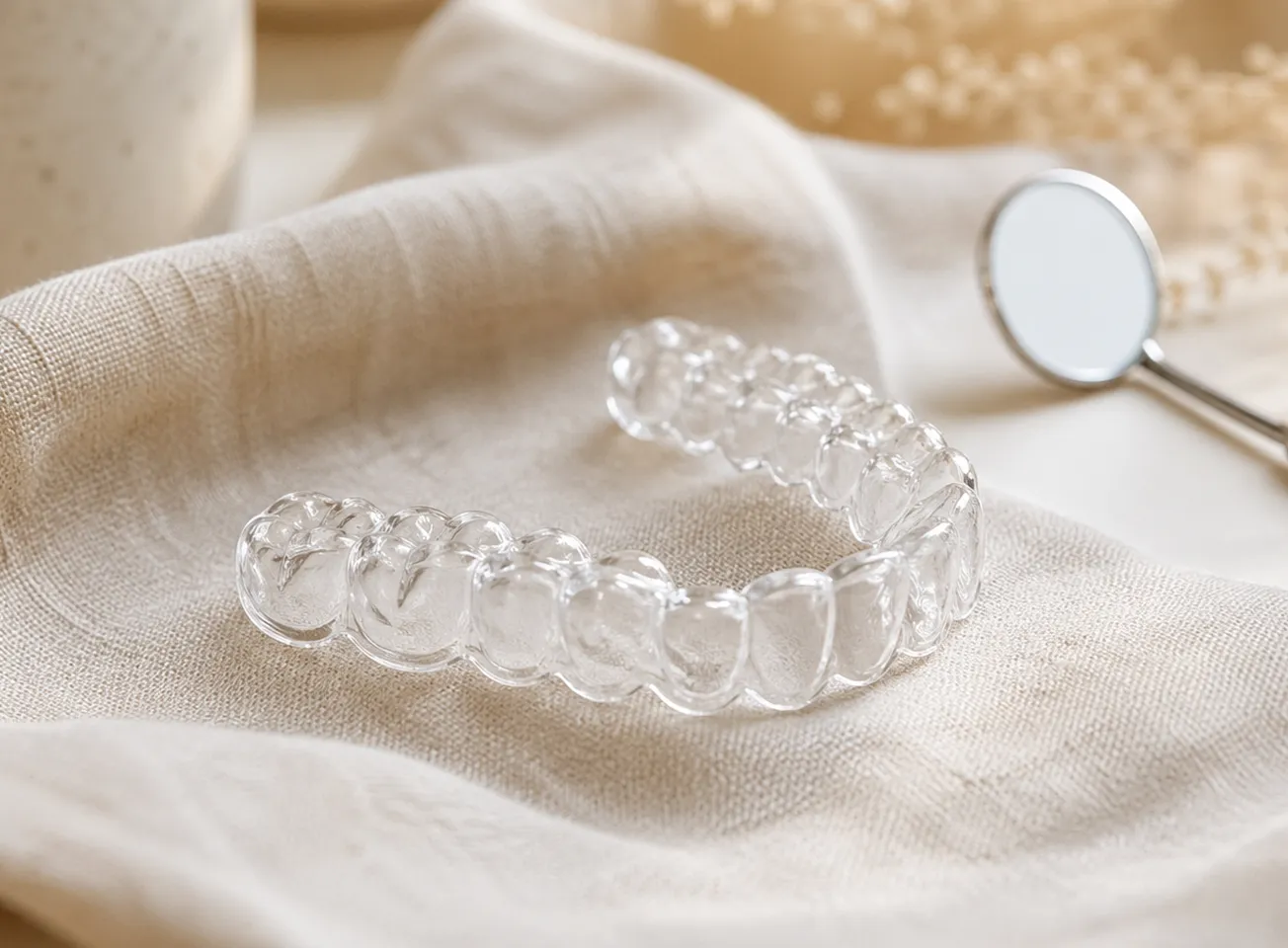
A stabilisation splint is sometimes described as just a night guard, as if protecting teeth were a minor act. But for a jaw system dealing with muscle overactivation, disc displacement, or occlusal interference, a correctly designed splint does something more specific: it removes the bite as a variable so the muscles and joint can find a resting position on their own. The design, material, and coverage of the splint are clinical decisions - not just comfort preferences.
Types of Splints and What Each One Does
- Michigan-style stabilisation splint - full-arch, flat plane, hard acrylic; the clinical standard for muscle relaxation and condyle repositioning
- Repositioning splint - brings the condyle forward to capture a displaced disc; used for specific structural presentations, not as a long-term solution
- Soft night guard - absorbs surface force; does not address joint position or muscle dysfunction; suitable for mild bruxism only
- Anterior bite plane - disengages posterior teeth; used short-term to reduce loading during acute phases
The Diagnostic Value of Splint Therapy
Beyond symptom relief, a properly fitted splint is a diagnostic instrument. The position the jaw adopts after four to six weeks of wearing a Michigan-style appliance reveals the comfortable physiological rest position of the condyle - free from the interference of the habitual bite. That position becomes the target for any occlusal rehabilitation that follows. Without this step, restorative work risks being built on a jaw position that is compensated rather than natural, leading to predictable failure over time.
What Stable Feels Like After Splint Therapy
Patients who respond well to splint therapy typically describe a quiet moment they notice gradually: the morning ache that was background noise for years is gone. Chewing on both sides feels even. The click is less frequent, or gone entirely. That quiet is not just comfort - it is a measurable sign that the jaw has found a position where muscle tension and joint load are balanced. It tells us the occlusal plan that follows is built on real data, not a compensated starting position.
A splint does not fix the jaw. It creates the conditions under which the jaw can show us where it actually wants to be.
- MedPalm Clinical Team
Indicative Starting Prices
For TMJ and Splint Therapy Pathways
Temporomandibular Joint Disorder Consultation (TMJ)
Jaw pain, headaches, bite imbalance
AED 750
Occlusal Splint
Custom bite appliance to stabilise joints and protect teeth
AED 4 000
Initial Condylography
Comprehensive jaw movement mapping to guide TMJ treatment
AED 4 000
Not Sure If You Need a Splint?
A structured TMJ assessment tells you exactly what the jaw needs - and what it does not.
More to Read
on TMJ & Function