

From Headaches to Tooth Wear — How Occlusion Hides in Plain Sight

The connection between occlusion and headaches is not a hypothesis - it is a pattern that shows up repeatedly in functional screenings. Patients arrive with complaints spread across three systems: teeth (wear, sensitivity, fractures), muscles (facial tension, temporal headaches), and joints (clicking, limited opening). When all three overlap, the common thread is usually the bite.
The Clues Dentists Look for During a Functional Screening
- Flat or shiny occlusal surfaces - enamel worn by tooth-on-tooth contact during sleep or stress
- Notching at the gum line (abfractions) - flexion fractures caused by off-axis bite forces
- Asymmetric muscle bulk - one masseter visibly larger than the other after years of unilateral chewing
- Deviated opening path - mandible swings to one side as the mouth opens, suggesting condylar asymmetry
- Tender trigger points - palpation of masseters, temporalis, and pterygoids that reproduces familiar headache pain
Why Headaches and Bite Problems Share the Same Root
The temporalis muscle - which runs across the temple - is one of the primary muscles of mastication. When the bite is unbalanced, the temporalis on the more heavily loaded side works harder, accumulates tension, and refers pain to the temple and forehead. Patients describe it as a band of pressure or a dull ache that worsens through the day and into the evening. It is clinically distinct from migraine and tension headache of cervical origin, though often misidentified as both. A functional screening differentiates between them by reproducing the pain through muscle palpation - something that neurological exams alone cannot achieve.
Why This Matters Before Any Restorative Work
If a patient presents with headaches and worn teeth and receives new crowns without addressing the occlusal cause, the crowns will wear. If they receive treatment for the headaches without understanding the muscular origin, the relief is temporary. The functional screening is not an extra step - it is the step that prevents repeating the same treatment cycle. Identifying the bite as the source allows us to address it directly, and plan any restorative work on a stable foundation rather than the same compromised geometry that caused the original damage.
Worn teeth are not a cosmetic problem. They are a record of years of unresolved force - and that record is worth reading before we write a new chapter.
- MedPalm Clinical Team
Indicative Starting Prices
For Occlusal and TMJ Assessment Pathways
Temporomandibular Joint Disorder Consultation (TMJ)
Jaw pain, headaches, bite imbalance
AED 750
Initial Condylography
Comprehensive jaw movement mapping to guide TMJ treatment
AED 4 000
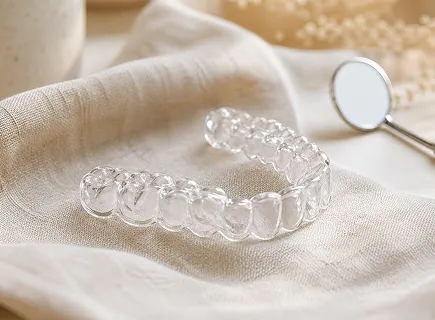
Occlusal Splint
Custom bite appliance to stabilise joints and protect teeth
AED 4 000
Headaches That Start in the Jaw
A functional screening often finds the source faster than a referral chain.
More to Read
on TMJ & Function